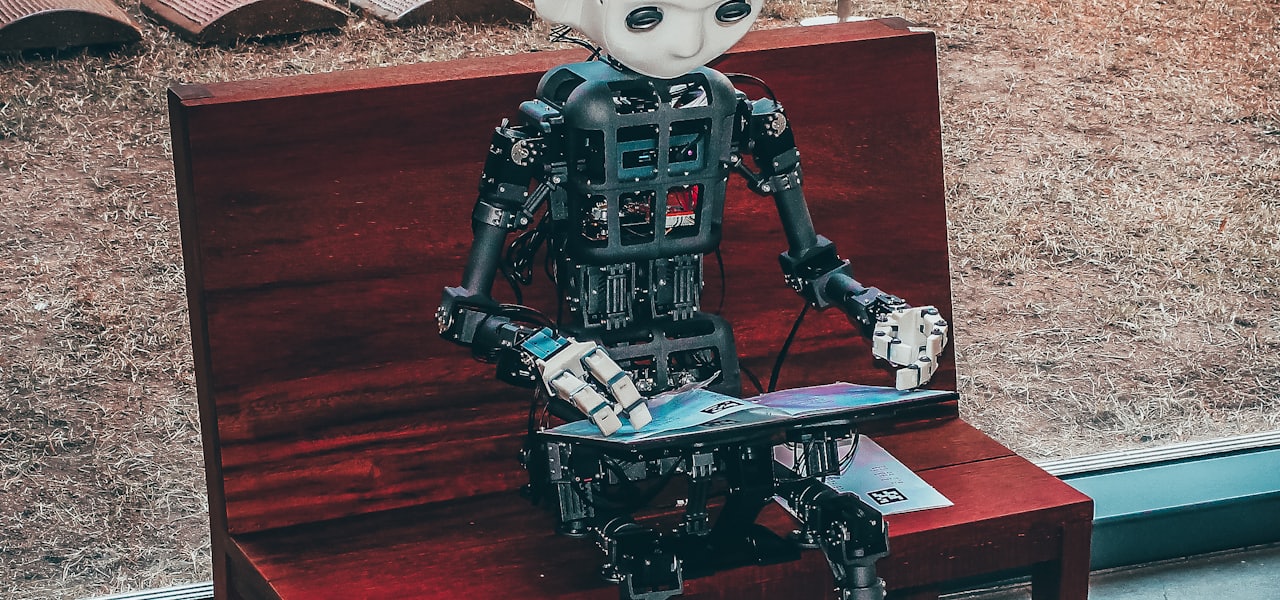
A world model in artificial intelligence is a machine learning system that builds an internal representation of an environment. The model predicts how that environment changes over time in response to actions. Researchers design world models to help agents plan, reason, and act without constant real-world trial and error. World models differ from systems that merely classify or generate outputs. They simulate dynamics such as physics, object interactions, and causality. Early ideas date to the 1990s. Modern versions power robots, autonomous driving, and interactive video generation. == History == Jürgen Schmidhuber introduced the term world model in machine learning in 1990. He proposed recurrent neural networks that predict future states from observations and use those predictions to train agents. David Ha and Schmidhuber revived the concept in a 2018 paper. Their agents learned to drive virtual cars and play video games inside self-generated simulations. Yann LeCun advanced the idea in a 2022 position paper titled "A Path Towards Autonomous Machine Intelligence". He argued that intelligence requires predictive models of the world rather than pure pattern matching. LeCun proposed the joint embedding predictive architecture (JEPA) as a practical foundation. LeCun and collaborators developed several JEPA variants. V-JEPA 2 reached state-of-the-art performance on video understanding and physical reasoning at the time. It supports zero-shot robot control in unfamiliar environments. Introduced in March 2026, LeWorldModel trains stably end-to-end from raw pixels and uses two loss terms and avoids hand-crafted heuristics. LeCun founded Advanced Machine Intelligence Labs in 2026 to further develop world models. Google DeepMind introduced Genie in 2024. The model learned interactive environments from unlabeled internet videos. Genie 2 followed in late 2024 and added three-dimensional generation. The Genie series set benchmarks for general-purpose simulation. Genie 3 was introduced in August 2025. It produces photorealistic, real-time interactive worlds from text prompts which are displayed at 24 frames per second and explored in real time with text or image prompts. The model supports persistent three-dimensional worlds and real-time interaction. Waymo adopted Genie 3 in February 2026 and used it to create a specialized world model for autonomous driving simulation, called the Waymo World Model. It produces synchronized camera and lidar outputs and creates edge cases that real robotaxis rarely encounter. The edge cases were reported to be unusual by PCMag. General Intuition announced a $133.7 million seed round. World Labs raised $1 billion. AMI raised $1.03 billion. In April 2026, Alibaba announced Happy Oyster, its world model designed for real-time and “flowy” world model. It includes a directing mode for world building based on text and image prompts and a wandering mode for exploring the resulting world. It can generate 3-minute in-world video clips. Also in April, World Labs, co-founded by Li Fei Fei, unveiled Spark 2.0, an open-source 3D Gaussian splatting rendering engine that targets smartphone-class devices. In June 2026, Nvidia released Cosmos 3, a family of open-weight models. It combines previously independent physical reasoning, world simulation, and action generation. Cosmos 3 integrates can process and generate text, image, video, audio, and action sequences. The model employs a Mixture-of-Transformers" (MoT) approach. An autoregressive (AR) transformer handles reasoning and next-token prediction, while a diffusion transformer (DT) does multimodal generation. Encoders (ViT for vision, VAE for visual/audio, and domain-specific for actions) and generate a shared representation space using 3D multi-dimensional rotary position embedding (mRoPE) for spatial and temporal information. The family includes Cosmos3-Nano (16B parameters) for workstations; Cosmos3-Super (64B parameters) for research. == Architecture == World models process raw sensory data such as video frames or lidar scans. They compress this input into compact latent representations. The system then predicts future representations rather than pixel-by-pixel reconstructions. Many modern world models use joint embedding predictive architecture (JEPA). An encoder turns observations into embeddings. A predictor estimates one or a suite of embeddings from the current one and an action. In some cases a critic chooses one embedding as the best result. A regularizer keeps embeddings well-behaved. The model trains by minimizing prediction error in embedding space. This approach avoids the high cost of generating every detail. Some architectures add explicit components. A fast reactive path handles immediate responses. A slower deliberative path performs longer-horizon planning. Video prediction accuracy or robot success rates are key metrics, but do not always predict real-world performance. Generative world models such as Genie 3 combine these with a simulator. They accept text prompts or layouts and output consistent video, lidar, or three-dimensional scenes. World models often train with self-supervised learning. They use large unlabeled datasets of video or robot interactions. Self-supervised learning can speed learning. Reinforcement learning can fine-tune a model for specific tasks. == Applications == World models support robot learning. Agents train inside simulations and transfer skills to the physical world. This reduces the need for dangerous or expensive real-world trials. Autonomous vehicles use world models to test rare events. Waymo's system simulates tornadoes or unusual pedestrian behavior. Companies train planners without putting vehicles on public roads. Interactive entertainment benefits from world models. Genie 3 lets users generate playable environments from simple descriptions. Game studios prototype levels faster. Scientific simulation gains from these models. Researchers model physical systems or biological processes at scale. Planners in logistics or urban design test strategies inside accurate digital twins. == Comparison with large language models == Both world models and large language models (LLMs) use inferencing on their inputs to make predictions. LLMs operate on textual inputs. They predict the next token in text sequences. They excel at language-oriented tasks such as translation or summarization. However, they lack understanding of physics. World models operate on sensor inputs such as pixels. They predict state changes in that data in latent space. This design supports planning and causal reasoning. LLMs generate fluent text but often fail at consistent physical predictions. Their architecture employs transformers with refinements such as mixture of experts. World models divide an inferencing task into work performed by encoders, predictors, simulators, and other pieces. They typically handle multimodal inputs such as video, lidar, radar, and audio, guided by textual prompting. LLMs power chatbots and code assistants. World models drive embodied agents that act in dynamic environments, such as autonomous driving. The two may be combined in hybrid systems. For example, a LLM handles instructions, while a world model manages low-level control. World model proponents such as LeCun claim that because LLMs are trained only on text, they have no ability to predict anything beyond text, such as real-world events. == Benchmarks == World model benchmarks test physical understanding, long-term consistency, planning, and generalization from sensor data. Meta introduced three benchmarks for V-JEPA 2. IntPhys 2 measures a model's ability to detect physics violations. It presents pairs of videos that diverge when one breaks physical rules. Humans score near 100% accuracy. V-JEPA 2 achieves little better than random chance on many conditions. Minimal Video Pairs (MVPBench) tests physical understanding through multiple-choice questions based on short video clips. It probes object interactions and causality. Something-Something tests action recognition. Epic-Kitchens-100 tests human action anticipation. DeepMind benchmark: Interactive evaluation measures consistency over minutes of interaction, memory of off-screen objects, and response to user actions or text prompts. Waymo benchmark: Output generation quality: Metrics include realism, controllability (via text prompts), and usefulness for training planners in simulated worlds. However, pixel reconstruction error rate with episodic rewards often fails. Other: Epic-Kitchens-100 (often measured with Recall@5) Ego4D 50 Salads, Breakfast, etc. Potential benchmarks: Zero-shot transfer to robots Long-horizon planning Implausible prediction rate
Source-code editor
A source-code editor is a text editor program designed specifically for editing the source code of computer programs. It includes basic functionality such as syntax highlighting, and sometimes debugging. It may be a standalone application or it may be built into an integrated development environment (IDE). == Features == Source-code editors have features specifically designed to simplify and speed up typing of source code, such as syntax highlighting(syntax error highlighting), auto indentation, autocomplete and brace matching functionality. These editors may also provide a convenient way to run a compiler, interpreter, debugger, or other program relevant for the software-development process. While many text editors like Notepad can be used to edit source code, if they do not enhance, automate or ease the editing of code, they are not defined as source-code editors. Structure editors are a different form of a source-code editor, where instead of editing raw text, one manipulates the code's structure, generally the abstract syntax tree. In this case features such as syntax highlighting, validation, and code formatting are easily and efficiently implemented from the concrete syntax tree or abstract syntax tree, but editing is often more rigid than free-form text. Structure editors also require extensive support for each language, and thus are harder to extend to new languages than text editors, where basic support only requires supporting syntax highlighting or indentation. For this reason, strict structure editors are not popular for source code editing, though some IDEs provide similar functionality. A source-code editor can check syntax dynamically while code is being entered and immediately warn of syntax problems, as well as suggest code autocomplete snippets. A few source-code editors compress source code, typically converting common keywords into single-byte tokens, removing unnecessary whitespace, and converting numbers to a binary form. Such tokenizing editors later uncompress the source code when viewing it, possibly prettyprinting it with consistent capitalization and spacing. A few source-code editors do both. The Language Server Protocol, first used in Microsoft's Visual Studio Code, allows for source code editors to implement an LSP client that can read syntax information about any language with a LSP server. This allows for source code editors to easily support more languages with syntax highlighting, refactoring, and reference finding. Many source code editors such as Neovim and Brackets have added a built-in LSP client while other editors such as Emacs, Vim, and Sublime Text have support for an LSP Client via a separate plug-in. == History == In 1985, Mike Cowlishaw of IBM created LEXX while seconded to the Oxford University Press. LEXX used live parsing and used color and fonts for syntax highlighting. IBM's LPEX (Live Parsing Extensible Editor) was based on LEXX and ran on VM/CMS, OS/2, OS/400, Windows, and Java Although the initial public release of vim was in 1991, the syntax highlighting feature was not introduced until version 5.0 in 1998. On November 1, 2015, the first version of NeoVim was released. In 2003, Notepad++, a source code editor for Windows, was released by Don Ho. The intention was to create an alternative to the java-based source code editor, JEXT In 2015, Microsoft released Visual Studio Code as a lightweight and cross-platform alternative to their Visual Studio IDE. The following year, Visual Studio Code became the Microsoft product using the Language Server Protocol. This code editor quickly gained popularity and emerged as the most widely used source code editor. == Comparison with IDEs == A source-code editor is one component of a Integrated Development Environment. In contrast to a standalone source-code editor, an IDE typically also includes several tools which enhance the software development process. Such tools include syntax highlighting, code autocomplete suggestions, version control, automatic formatting, integrated runtime environments, debugger, and build tools. Standalone source code editors are preferred over IDEs by some developers when they believe the IDEs are bloated with features they do not need. == Notable examples == == Controversy == Many source-code editors and IDEs have been involved in ongoing user arguments, sometimes referred to jovially as "holy wars" by the programming community. Notable examples include vi vs. Emacs and Eclipse vs. NetBeans. These arguments have formed a significant part of internet culture and they often start whenever either editor is mentioned anywhere.
Inbenta
Inbenta is an AI company that originated in Barcelona, Spain, in 2005. Inbenta is currently headquartered in Allen, Texas, with additional offices in Spain, São Paulo, Brazil, Toulouse, France, and Tokyo, Japan. Inbenta provides natural language processing and semantic search through artificial intelligence. == History == Inbenta raised $12 Million in their Series B funding round to extend the reach of their artificial intelligence for business solutions. In 2023 Inbenta's new chief executive officer Melissa Solis moved Inbenta's headquarters to One Bethany West in Allen, Texas from Foster City, California. == Controversy == On 23 June 2018, Ticketmaster UK identified malicious software on a customer support product hosted by Inbenta Technologies, compromising personal data and payment details for thousands of Ticketmaster customers. Three days later, Inbenta's CEO Issued a message about the incident to convey the full scope of the breach. Also on its FAQ section, Inbenta claimed that "After a careful analysis of all clues and snapshots from our systems, the technical team at Inbenta discovered that the script had been implemented on the payment page. We were unaware of this, and would have advised against doing so had we known, as it presents a point of vulnerability". On November 13, 2020, the Information Commissioner's Office fined Ticketmaster UK Limited £1.25 million for failing to protect customers' payment details. According to the ICO, "It was because of Ticketmaster's business decision to include the [Inbenta] chat bot on its payment page that the chat bot was able to unlawfully process the personal data of customers."
Luciano Floridi
Luciano Floridi (Italian: [luˈtʃaːno ˈflɔːridi]; born 16 November 1964) is an Italian and British philosopher. He is John K. Castle Professor in the Practice of Cognitive Science and Founding Director of the Digital Ethics Center at Yale University. He is also a Professor of Sociology of Culture and Communication at the University of Bologna, Department of Legal Studies, where he is the director of the Centre for Digital Ethics. Furthermore, he is adjunct professor ("distinguished scholar in residence") at the Department of Economics, American University, Washington D.C. He is married to the neuroscientist Anna Christina Nobre. Floridi is best known for his work on two areas of philosophical research: the philosophy of information, and information ethics (also known as digital ethics or computer ethics), for which he received many awards, including the Knight of the Grand Cross of the Order of Merit, Italy's most prestigious honor. According to Scopus, Floridi was the most cited living philosopher in the world in 2020. Between 2008 and 2013, he held the research chair in philosophy of information and the UNESCO Chair in Information and Computer Ethics at the University of Hertfordshire. He was the founder and director of the IEG, an interdepartmental research group on the philosophy of information at the University of Oxford, and of the GPI the research Group in Philosophy of Information at the University of Hertfordshire. He was the founder and director of the SWIF, the Italian e-journal of philosophy (1995–2008). He is a former Governing Body Fellow of St Cross College, Oxford. == Early life and education == Floridi was born in Rome in 1964, and studied at Rome University La Sapienza (laurea, first class with distinction, 1988), where he was originally educated as a historian of philosophy. He soon became interested in analytic philosophy and wrote his tesi di laurea (roughly equivalent to an M.A. thesis) in philosophy of logic, on Michael Dummett's anti-realism. He obtained his Master of Philosophy (1989) and PhD degree (1990) from the University of Warwick, working in epistemology and philosophy of logic with Susan Haack (who was his PhD supervisor) and Michael Dummett. Floridi's early student years are partly recounted in the non-fiction book The Lost Painting: The Quest for a Caravaggio Masterpiece, where he is "Luciano". During his graduate and postdoctoral years, he covered the standard topics in analytic philosophy in search of a new methodology. He sought to approach contemporary problems from a heuristically powerful and intellectually enriching perspective when dealing with lively philosophical issues. During his graduate studies, he began to distance himself from classical analytic philosophy. In his view, the analytic movement had lost its way. For this reason, he worked on pragmatism (especially Peirce) and foundationalist issues in epistemology and philosophy of logic, as well as the history of skepticism. == Academic career and previous positions == Floridi started his academic career as a lecturer in philosophy at the University of Warwick in 1990–1991. He joined the Faculty of Philosophy of the University of Oxford in 1990 and the OUCL (Oxford's Department of Computer Science) in 1999. He was junior research fellow (JRF) in philosophy at Wolfson College, Oxford University (1990–1994), a Frances Yates Fellow in the History of Ideas at the Warburg Institute, University of London (1994–1995) and Research Fellow in philosophy at Wolfson College, Oxford University (1994–2001). During these years in Oxford, he held lectureships in different Colleges. Between 1994 and 1996, he also held a post-doctoral research scholarship at the Department of Philosophy, University of Turin. Between 2001 and 2006, he was Markle Foundation Senior Research Fellow in Information Policy at the Programme in Comparative Media Law and Policy, Oxford University. Between 2002 and 2008, he was associate professor of logic at the Università degli Studi di Bari. In 2006, he became Fellow by Special Election of St Cross College, Oxford University, where he played for the squash team. In 2008, he was appointed full professor of philosophy at the University of Hertfordshire, to hold the newly established research chair in philosophy of information and, in 2009, the UNESCO Chair in Information and Computer Ethics, a position which he held until 2013, when he moved back to Oxford. In 2017, Floridi became a fellow of the Alan Turing Institute and the chair of its Data Ethics Group, holding these positions until 2021 and 2020, respectively. Since 2010 he has been editor-in-chief of Philosophy & Technology (Springer). In January 2023, Floridi announced he would move to Yale at the beginning of the academic year 2023–2024, to take over the position of founding director of the Yale Digital Ethics Center. == Philosophical views == One of Floridi's key contributions is his formulation of the 'Philosophy of Information' (PoI). The PoI provides a framework for understanding the nature of information and its role in the world. According to Floridi, information is a vital resource that shapes our knowledge and understanding of the world. It is not simply a neutral representation of reality but a part of the world, with its own properties, effects, and moral implications. Floridi's PoI has several key components including an 'ontology of information', which defines the nature of information, an 'ethics of information', which provides a framework for evaluating the moral implications of information and information technologies, an 'epistemology of information', that analyses the role of information in the development of knowledge and science, and a 'logic of information', the concentrates on the more formal aspects. The PoI also includes a theory of the 'information environment', the infosphere, which encompasses the physical, social, and cultural contexts in which information is produced, used, and communicated. == Recognitions and awards == 2022 - Knight of the Grand Cross - First Class of the Order of Merit (Cavaliere di Gran Croce Ordine al Merito della Repubblica Italiana, the highest honor in the Italian Republic), awarded through a special decree by the president of the Italian Republic Sergio Mattarella for his work on the philosophy and ethics of information. 2022 - Fellow of the Accademia delle Scienze dell'Istituto di Bologna 2021 - Honorary Doctorate (Laurea honoris causa) in Informatics, University of Skövde, Sweden, for "his groundbreaking work on the philosophy of information". 2020 - Premio Udine Filosofia, Mimesis Festival, for The Logic of Information (OUP, 2019) 2020 - Premio Socrate, Cesare Landa Foundation, for philosophical communication 2019 - CogX Award, for "outstanding achievement in ethics of AI" 2019 - Gilbert Ryle Lectures, Trent University 2019 - Premio Aretè "Maestro della Responsabilità", Nuvolaverde, Confindustria, Gruppo 24 Ore Salone della CSR e dell'innovazione sociale, for ethics of communication 2018 - Thinker Award, IBM, for AI Ethics 2018 - Premio Conoscenza, Conferenza dei Rettori delle Università Italiane (CRUI, equivalent of Universities UK), for achievements in research and communication about digital ethics 2017 - Fellow of the Academy of Social Sciences 2016 - J. Ong Award, Media Ecology Association, for The Fourth Revolution (OUP, 2016) 2016 - Copernicus Scientist Award, Institute for Advanced Studies of the University of Ferrara, in recognition of research in the ethics and philosophy of information 2015 - Fernand Braudel Senior Fellow, European University Institute 2014-15 - Cátedras de Excelencia, University Carlos III of Madrid, for research in philosophy and ethics of information 2013 - Member of the Académie Internationale de Philosophie des Sciences 2013 - Fellow of the British Computer Society 2013 - Weizenbaum Award, International Society for Ethics and Information Technology, for "very significant contribution to the field of information and computer ethics, through his research, service, and vision" 2012 - Covey Award, International Association for Computing and Philosophy, for "outstanding research in computing and philosophy" 2011-12 - Fellow, Center for Information Policy Research, University of Wisconsin–Milwaukee 2011 - Honorary Doctorate (Laurea honoris causa) in philosophy, University of Suceava, Romania, for "his leading research in the philosophy and ethics of information" 2011 - Fellow, World Technology Network, NY, in the category "ethics and technology" 2010 - Vice Chancellor Research Award, University of Hertfordshire 2009 - Fellow of the Society for the Study of Artificial Intelligence and the Simulation of Behaviour (AIBS) 2009-10 - Gauss Professor of the Akademie der Wissenschaften, Göttingen, in recognition of research in the philosophy of information (first philosopher to receive the award, generally given to mathematicians or physicists) 2009 - Barwise Prize, American Philosophical Asso
Ari Holtzman
Ari Holtzman is a professor of Computer Science at the University of Chicago and an expert in the area of natural language processing and computational linguistics. Previously, Holtzman was a PhD student at the University of Washington where he was advised by Luke Zettlemoyer. In 2017, he was a member of the winning team for the inaugural Alexa Prize for developing a conversational AI system for the Amazon Alexa device. Holtzman has made multiple contributions in the area of text generation and language models such as the introduction of nucleus sampling in 2019, his work on AI safety and neural fake news detection, and the fine-tuning of quantized large language models.
ParkMobile
ParkMobile is a mobile and web app providing parking payments in North America. Headquartered in Atlanta, Georgia, users can pay for on-street and off-street parking via app on their smartphone, web browser, or through calling a phone number. ParkMobile also offers parking reservations at stadiums or venues for concerts and sporting events, and in metro area garages. == History == ParkMobile was founded in the United States in 2008 by Albert Bogaard after originally starting in the Netherlands. The initial product served only zone (on-demand) parkers and payment for the parking spot was made via a phone call through an IVR system. In 2009, the ParkMobile app was released and the product launched in its first city, Grand Rapids, Michigan. Parking payments have since been accepted through a user's account by connecting a credit card. ParkMobile deployed in Washington, D.C., in 2011. As of 2023, ParkMobile now has over 50 million users. Parking reservations were introduced in 2017, allowing users to reserve parking in advance. In 2018, the company recapitalized with BMW as the shareholder. ParkMobile was then acquired by a joint venture with BMW and Daimler. Under this joint venture, ParkMobile parking payment functionality was available and integrated with BMW's navigation system in many of its 2018 models. EasyPark Group, the Swedish-based parking solutions company, acquired ParkMobile in 2021 and is the current owner rebranded as Arrive. In 2022, ParkMobile launched in the City of Boston with a city-wide parking app, ParkBoston, powered by ParkMobile. == Operations == === Products === ParkMobile's product offerings include zone (on-demand) parking payments, parking reservations, and a self-service reporting engine. Zone parking is the company's most widely used service. Users can use the app on their smartphone to pay parking fees. In 2017, ParkMobile began offering parking reservations. The service is provided in addition to on-demand parking options at stadiums and venues, as well as metro area parking garages. After launching the reservations feature, ParkMobile became the first mobile parking app provider in North America to have a consolidated app with both on-demand and reservations parking in one. ParkMobile 360, the company's self-service management and reporting platform for operators, launched in 2018. It is a web-based application for parking operators to manage parking inventory, adjust rates, create special parking events, and track analytics. In 2020, ParkMobile began offering an option to pay for parking with Google through integrating the ParkMobile experience with Google Maps In 2021, ParkMobile launched its web application, allowing users to complete their parking transactions directly from the mobile website without having to download the app or have an account. ParkMobile integrates with parking gate equipment so customers can use their app to pay for parking and scan to enter and exit the garage. === Locations === ParkMobile has over 50 million users across the United States, Canada, and Puerto Rico. The app is available in over 550 cities in the U.S. and over 150 colleges and universities. == Controversies == === Predatory towing and excessive ticketing === Since all paid parking sessions from a single supplier are able to be viewed together, the ease of viewing and enforcing parking violations has caused controversy. Parking Enforcement Services in Birmingham, Alabama, has been the subject complaints by users of the ParkMobile app who had paid for a parking session and still had their vehicle towed. Customers often use old or expired license plates and forget to update to the correct number, or mistype when entering their information into the ParkMobile app. The complaints are that the towing companies offer no lenience for these mistakes. They return to their car as the session expires, and find their car has been towed. Additionally, other municipality across the country have received complaints about excessive parking ticket issuing when inputting their information incorrectly in the ParkMobile app. In Stone Harbor, New Jersey, parking ticket violations increased by over 1,600% from the previous year since launching with the ParkMobile app. Police officers refute complaints of being "too strict" on writing tickets by admitting the ParkMobile system allows officers to "more seamlessly enforce" the city's parking laws. === Data security breach === In March 2021, ParkMobile suffered a cybersecurity incident "linked to a vulnerability in a third-party software," potentially exposing users' email addresses, phone numbers, and license plate numbers. ParkMobile responded by launching an investigation and notifying law enforcement authorities and affected municipalities. The investigation concluded "no sensitive data or Payment Card Information was affected" but ParkMobile confirmed that basic account information, such as license plate numbers and possibly email addresses or phone numbers, was accessed.
Script theory
Script theory is a psychological theory which posits that human behaviour largely falls into patterns called scripts because they function the way a written script does, by providing a program for action. Silvan Tomkins created script theory as a further development of his affect theory, which regards human beings' emotional responses to stimuli as falling into categories called affects: he noticed that the purely biological response of affect may be followed by awareness and by what we cognitively do in terms of acting on that affect, so that more was needed to produce a complete explanation of what he called human being theory. These scripts fall under the larger cognitive concept called schemas, which are organized chunks of information. A schema is a script that has the potential to lack the specificity of the sequence of events. A schema becomes a script is when there is an ordering to it that requires action, such as the process of starting a car (get in, put on the seatbelt, turn the car on, release the emergency brake, etc.). In script theory, the basic unit of analysis is called a scene, defined as a sequence of events linked by the affects triggered during the experience of those events. Tomkins recognized that affective experiences fall into patterns that we may group together according to criteria, such as the types of persons and places involved and the degree of intensity of the effect experienced—the patterns of which constitute scripts that inform behavior in an effort to maximize positive affect and to minimize negative affect. == In artificial intelligence == Roger Schank, Robert P. Abelson and their research group extended Tomkins' scripts and used them in early artificial intelligence work as a method of representing procedural knowledge. In their work, scripts are very much like frames, except the values that fill the slots must be ordered. A script is a structured representation describing a stereotyped sequence of events in a particular context. Scripts are used in natural-language understanding systems to organize a knowledge base in terms of the situations that the system should understand. The classic example of a script involves the typical sequence of events that occur when a person drinks in a restaurant: finding a seat, reading the menu, ordering drinks from the waitstaff, etc. In the script form, these would be decomposed into conceptual transitions, such as MTRANS and PTRANS, which refer to mental transitions [of information] and physical transitions [of things]. Schank, Abelson and their colleagues tackled some of the most difficult problems in artificial intelligence (i.e., story understanding), but ultimately their line of work ended without tangible success. This type of work received little attention after the 1980s, but became very influential in later knowledge representation techniques, such as case-based reasoning. Scripts can be inflexible. To deal with inflexibility, smaller modules called memory organization packets (MOP) can be combined in a way that is appropriate for the situation.